
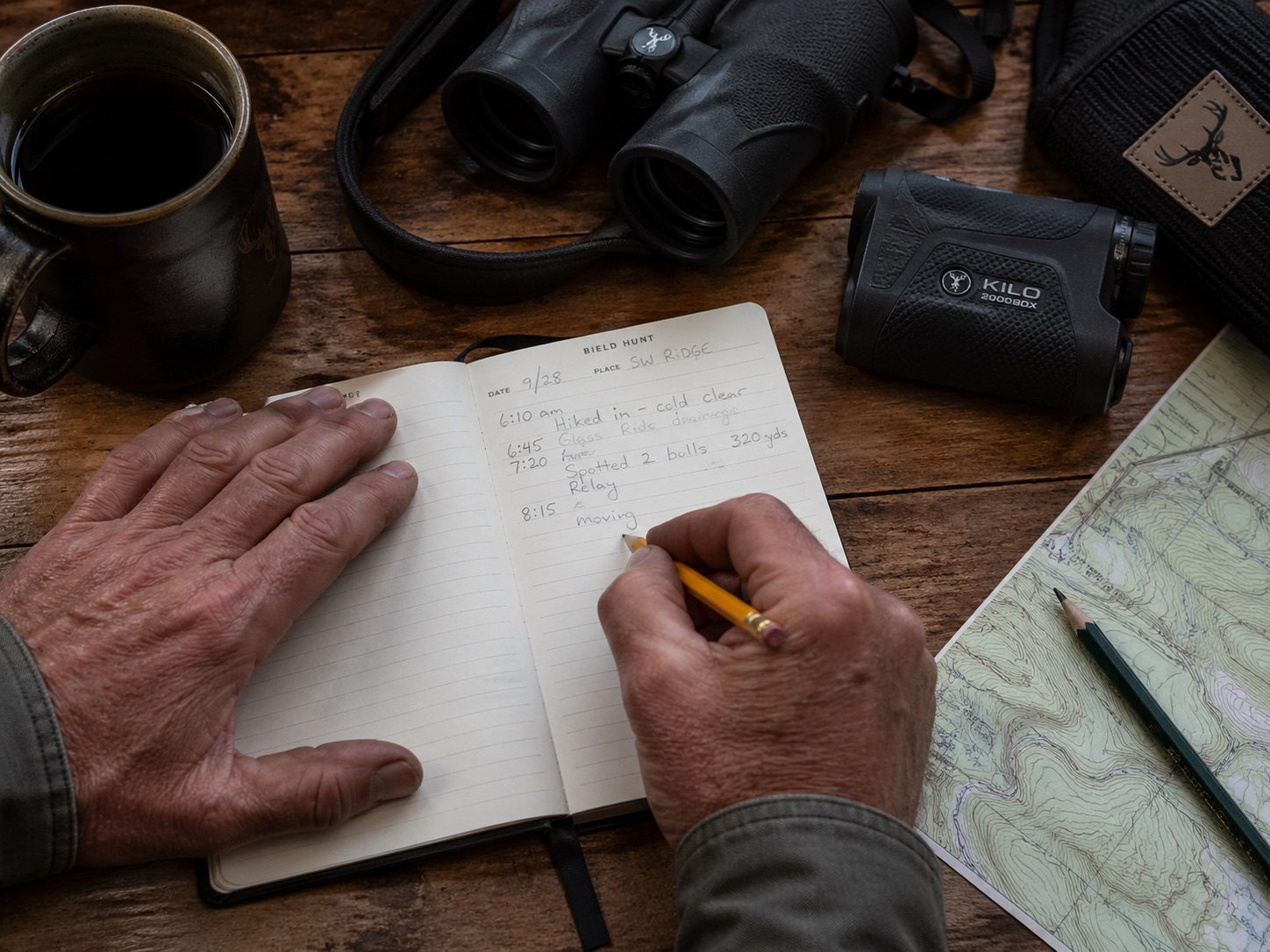
You can't improve what you don't measure. Every hunter trusts their intuition about stands and seasons. Then they compare it to actual data. The gap becomes obvious.
Data-driven hunting transforms guesswork into results. Every serious hunter who switches from gut feeling to systematic data tracking discovers the same truth: the conditions that work in theory often differ from the conditions that actually work in your woods. You move from remembering a great morning to knowing exactly which conditions produce results. Which stands produce tags. Which times yield mature bucks. This isn't about fancy technology or apps—it's about systematic observation and data tracking that reveals patterns invisible to memory alone.
Identifying Your Productive Stands
You hunt five stands. After a season, memorable experiences fill your memory. But which stand actually produces tags? Data tracking answers this question.
Let's look at real numbers:
- Stand A: Two young bucks in October
- Stand B: Zero deer sighted
- Stand C: Four mature buck sightings, two ethical opportunities
- Stand D and E: Quiet all season
Your data says Stand C wins. Not because it "feels right." Not because it looks good. The record shows bucks approach that location consistently. When you track your stands with actual data, you eliminate the guesswork.
Yet many hunters abandon Stand C next season because they got bored. The data warned against it. When conditions weren't ideal, they assumed the stand was dead. Smart hunting means using stand selection guidance to match your stands to actual conditions. Check that resource for proven tactics on choosing and hunting productive stands.
Tracking stand location, date, time, weather, wind, and observations creates a record. That record teaches every hunter where to invest their limited sit days. Data tracking becomes your competitive advantage.
Uncovering Behavioral Patterns
One observation is an incident. Ten observations across three seasons form a pattern. You notice Stand C produces mature bucks almost exclusively during the first two hours after dawn in October. That's not luck—it's a pattern in your hunting data waiting for confirmation.
Behavioral patterns in hunting emerge only from accumulated data:
- Do does travel alone this October? Or in groups of three to five?
- Where are these groups concentrated?
- Has pressure or food shifted the herd's behavior?
Track these variables alongside observations in your hunting journal. Subtle correlations emerge. Not guarantees. Patterns that shape how every serious hunter plans their conditions and timing.
"Deer movement peaks 48 hours after a full moon during October" isn't a wild guess if your data supports it. It becomes a principle. It shapes your hunting calendar and your stand selection strategy. Learn from comprehensive guides on buck behavior to understand the science behind seasonal patterns.
Your intuition about November being the "rut" is accurate. But your data tracking might show peak activity occurs November 8-15, not November 1-30. That focused window changes everything. When you know which conditions and which stands align with peak hunting opportunities, you become a more effective hunter.
Quantifying Success and Failure
Success rate per stand is simple to calculate. Number of opportunities divided by number of sits at that location.
If Stand C produced two opportunities in twelve sits, that's roughly 17% conversion. Stand A produced zero in fifteen sits. Your data guides future hunting decisions about stands and conditions.
Failure factors are equally important. Stand B had zero observations in twenty sits. Wind direction data reveals the issue: you only hunted it on bad wind days. That stand isn't unproductive. You never gave it a fair chance. Hunt it on north winds specifically. This is why every hunting professional emphasizes data tracking—your conditions matter as much as your stand choice.
Which wind directions killed the most game? That data is invaluable. Every successful sit in your hunting records happened with northeast winds. It's not coincidence. Your stand placement is optimized for that wind. Other conditions compromise it. Sit elsewhere on other wind days, or accept the stand's limitations based on actual data.
Timing matters too:
- Sits 6-9 AM: Four sightings
- Sits 3-5 PM: Zero sightings
This particular stand shows a morning preference. Allocate your sit time accordingly. When you're serious about hunting results, gear selection matters too. A quality trail camera system—after testing multiple options at different price points—is worth the investment for any serious data collector. Modern trail cameras provide time-stamped records that accelerate pattern recognition and transform your data tracking capabilities.
Mitigating Hunting Pressure
One of the most underrated uses of data is tracking pressure. Every time you enter your woods, you apply pressure. Every other hunter does too.
Correlate sit success with the number of hunters in the area. The pattern becomes undeniable. During opening weekend, Stand A produced one buck sighting but heavy pressure. Following Wednesday, same stand, light pressure, zero deer. Pressure wasn't the only variable affecting conditions and success. But it's in the data.
As more sits accumulate in your hunting records, pressure's effect clarifies. Your best stand becomes a liability by mid-season if pressure doesn't ease. Data supports choosing a different location for the latter half of the hunting season. Avoid pounding the same stand into oblivion.
Building Your Personal Database
A notebook, spreadsheet, or phone app works. Record systematically:
- Date, stand, time sat
- Conditions: temperature, wind, pressure, sky
- Deer observed: count, size, behavior, approach direction
- Opportunities: Did a deer get within range?
- Outcome: Shot opportunity, passed, spooked
Three seasons of consistent hunting data reveals your woods in ways decades of intuition cannot. You'll see patterns you never suspected. You'll realize some convictions you held about your stands and conditions were simply wrong. Data tracking becomes the foundation of every successful hunter's strategy.
Taking Action on Your Data
Data alone doesn't improve your hunting success. Action does. Review your spreadsheet quarterly. Identify which stands and conditions consistently produce opportunities. Plan next season around what works in your actual hunting environment.
Consider investing in quality gear that matches your data and conditions. A complete guide to hunting gear can help you buy equipment proven by other serious hunters. Price varies widely, but premium gear often pays dividends in comfort, performance, and reliability during critical hunting windows. When your data shows consistent success under specific conditions, invest in the gear that helps you execute that strategy.
The hunter who measures is the hunter who improves. The alternative is repeating the same season every year and calling it experience. Serious hunters use data tracking to break that cycle.
Ready to transform your hunting with data tracking? Download Bield Hunt today and start logging your stands, conditions, and observations immediately. Every entry strengthens your personal hunting database. Every season of data brings you closer to the game plan that works for your woods and your style.
Bring data to your next season. Sign up free at bieldhunt.com and join serious hunters who've already made the switch from gut feeling to game plan.