
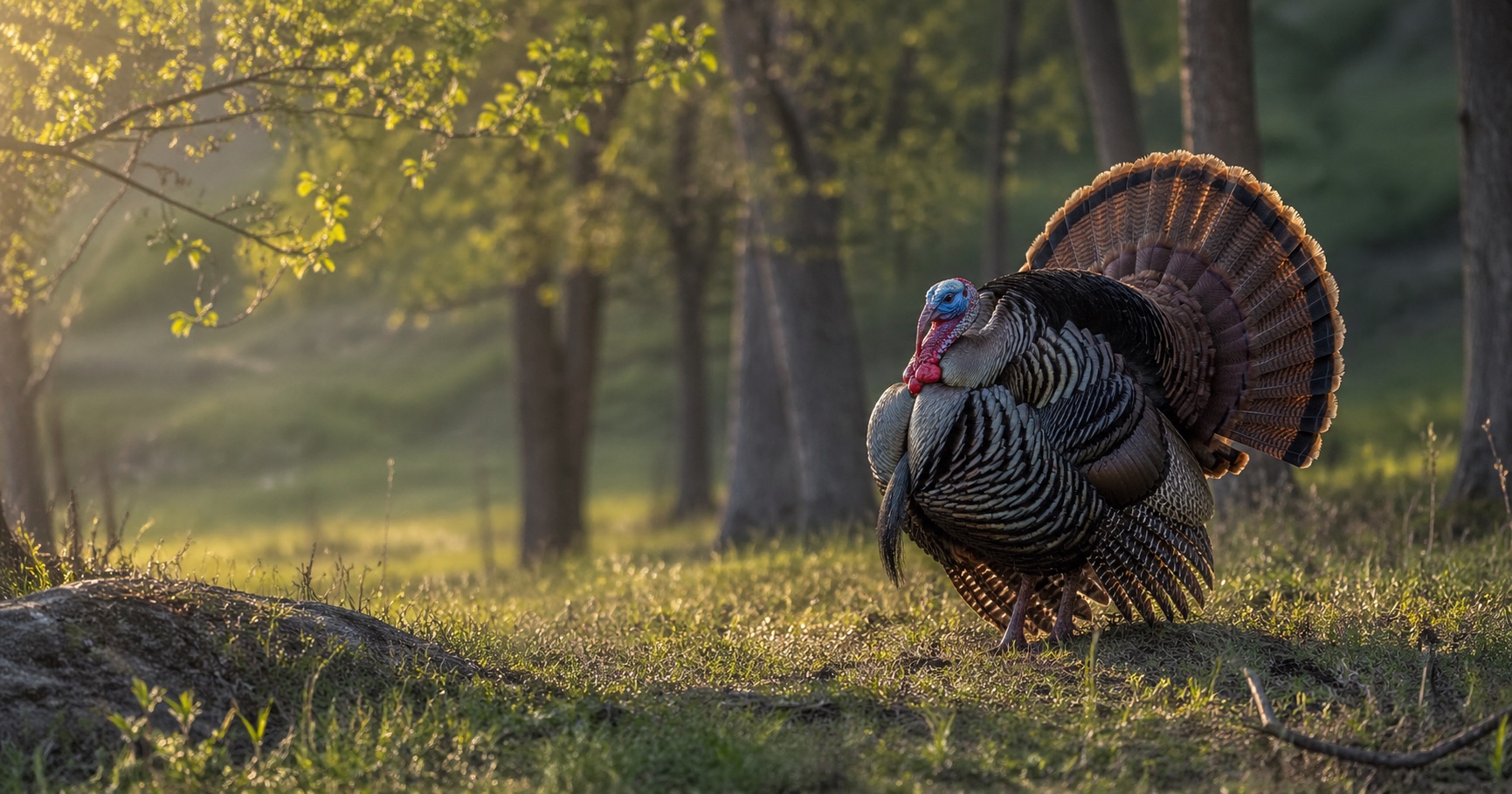
Your deer logbook works for deer. It doesn't work for turkeys. The variables that drive turkey behavior are different enough that tracking turkeys with a deer data structure wastes the one asset that matters: your observation time. You're collecting the wrong data points, so your analysis leads nowhere.
The Variables Don't Overlap
Whitetail rut timing is driven by individual deer response to photoperiod and dominance within the population. The rut can shift 5–7 days year to year depending on the specific pressure of the dominant bucks on your property. Observation rate and sighting data matter because the rut phase varies by location and season.
Eastern turkey breeding is calendar-driven. Gobblers start responding reliably within a 1–2 week window year to year, the same narrow range. The rut timing is nearly constant. That changes what data you need to track.
Moon phase affects whitetail movement significantly. New moons and full moons correlate with deer activity levels. Moon phase doesn't meaningfully affect gobble activity. Turkey gobbling correlates strongly with barometric pressure. High pressure after a front passes triggers aggressive gobbling. Dropping pressure before a storm suppresses it. Check your deer hunting data—barometric pressure probably doesn't appear at all.
Wind barely affects gobbling volume or strut zone activity. A turkey will gobble the same from a ridge into a 15 mph north wind as from a sheltered flat. Thermals and wind direction are critical for deer hunting and nearly irrelevant for turkey hunting.
These are different animals with different behavioral drivers. One data structure doesn't capture either well.
What Turkey Data Actually Needs
Build a separate logbook for turkey observation with:
- Gobble count per sit (number of gobbles heard, not presence or absence)
- Time of gobbles (do they peak in the first hour post-sunrise, or throughout the morning?)
- Strut zone location observed (open fields, field edges, thick cover, moving between areas)
- Barometric pressure (high, dropping, storm-approaching)
- Temperature (turkeys shift strut zones based on warmth)
- Hens and jakes observed (locations where non-tom birds appear, independent of gobbling)
- Direction birds moved (toward lower pressure or away from approaching weather)
- Calling heard (from other hunters, which suppresses or accelerates gobbling)
Turkeys in the hour after sunrise are data. If you have five sits in late April with morning gobbles at 5:45 a.m., high pressure, 40 degrees, and birds moving toward open fields—that's a repeatable pattern. Hunt high-pressure mornings at that time in open areas. If you have three sits with no gobbles during low-pressure pre-storm mornings, you now know to hunt the high-pressure days instead.
That pattern emerges from turkey-specific data. It never appears in a deer logbook because a deer logbook doesn't track barometric pressure or gobble count or strut zone location.
Strut Zones Shift by Time of Day
This alone justifies separate tracking. Turkeys use different cover at dawn than they use at 9 a.m. A strut zone in an open field at 5:30 a.m. becomes edge cover or woods by mid-morning. By afternoon, birds retreat to thick cover or water.
Your deer stands are positioned for thermals, wind drift, and cover-to-food movement patterns. A turkey stand needs to intercept the strut zone at the right time of day. "The field" isn't enough—you need "the field at dawn" or "the field edge at 8 a.m." or "the woods behind the field at 10 a.m."
Without logging strut zones over multiple seasons, you can't build that specificity. You'll hunt a general area and hope. With turkey-specific data, you hunt the exact location and time where birds are most likely to be.
Breeding Chronology Matters Differently
Whitetail hunters obsess over the rut because the rut is where individual bucks go active. The rut can shift. Hens breed in a narrow window, but the peak of chase phase can occur across a 3-week span depending on the property and year.
Turkey breeding chronology is tighter. Gobblers start responding by mid-April in the Northeast, within 1–2 weeks of the same calendar date year to year. Hens lay eggs and begin incubation roughly mid-May. The window is predictable.
This means your turkey hunting timeline is the same every season. You don't need to track when the rut "starts" on your property. It starts around April 15, give or take a few days. What varies is how aggressive the birds are on any given day—which depends on barometric pressure, not rut phase.
Your deer data structure asks, "When is the rut on my property?" Your turkey data structure asks, "What's the gobbling intensity today, and where are birds positioned based on current conditions?" Different questions, different data.
Hens and Jakes Are Locations
Many turkey hunters focus on gobbling toms and ignore hens and jakes. That's throwing away location data. Hens and jakes congregate at specific areas independent of the toms' gobbling activity. A logged observation of three jakes in a fallow field, or a hen flock moving toward a particular ridge, tells you where turkeys are moving and roosting—information that gobble count alone doesn't provide.
Track all observations. The quiet morning with no gobbles but two hens moving through a cedar glade is data. That glade is worth hunting after a no-gobble morning because turkeys are using it regardless of gobbling activity.
Three Seasons Builds a Turkey-Specific Model
After three seasons of turkey-specific logging, you'll know:
- Which weeks produce the most gobbling (calendar date)
- Which barometric conditions trigger aggressive morning response
- Which strut zones are active in the first hour vs. mid-morning
- Which areas hold hens and jakes when toms go silent
- The time of morning when gobbling peaks on your property
Your deer data can't tell you any of that. Your turkey data can. Use the right tool for the animal you're hunting.