
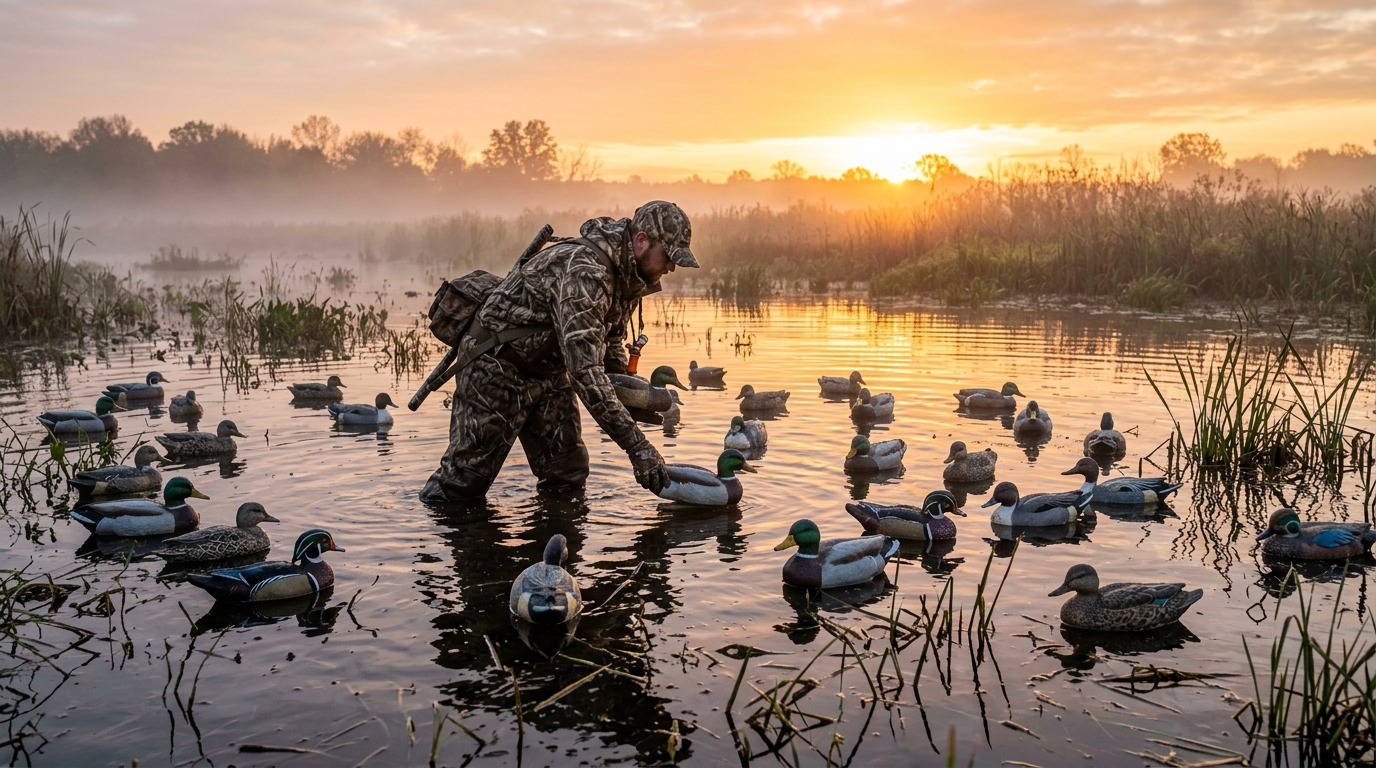
The teal will be here before you know it. Early goose season opens even sooner. And yet every year, thousands of waterfowl hunters treat September as if it were still summer, only to show up on opening day wondering why the birds are landing two hundred yards away in someone else's decoys. The hunters who limit out on opener are not better callers. They are better scouts. They spent August walking marshes, reading water levels, and understanding how birds use the land before the pressure starts. Waterfowl season prep is not something you do the weekend before opening day. It is something you do in waders under a hot August sun while the rest of the hunting world is still thinking about deer. Those August miles matter more than any calling contest you will enter in September.
This article covers the late-summer habitat checklist that separates productive waterfowl hunts from frustrating mornings. It is about reading wetlands the way ducks read them, identifying the food sources that matter, and setting up your spread before the birds have any reason to avoid it. If you do this work now, you will hunt the "X" on opening day instead of hoping to draw birds to a spot they do not want to be.
Why August Scouting Determines September Success
Waterfowl are creatures of habit until they are creatures of pressure. In late summer, before the shooting starts, ducks and geese settle into patterns driven by food, water, and safety. They roost on larger water bodies, fly out to feed in shallow wetlands, agricultural fields, or managed impoundments, and return to the roost before midday. These patterns are predictable, and predictable means scoutable.
The problem is that by the time most hunters start thinking about ducks, the early teal season is already open and the birds have been bumped out of their first-choice spots. The hunters who put in the August legwork know where the birds want to be before opening day. They know which ponds have six inches of water and which have two feet. They know which fields were planted in corn and which were left fallow. They know the flight lines because they watched them in August, not because they guessed on opening morning.
Early-season waterfowl success depends heavily on scouting during late summer when birds are establishing patterns. This is not glamorous work. It involves driving back roads at dawn, knocking on farmers' doors, walking through muck in ninety-degree heat, and taking notes that seem meaningless until opening day. But it is the single biggest predictor of success in September. Habitat scouting is the foundation of waterfowl season prep, and it starts now.
Reading Wetlands: What Ducks Actually Need
Not every puddle on the landscape holds ducks. Waterfowl have specific habitat requirements, and understanding them lets you eliminate dead water before you waste a morning sitting in it. Ducks and geese prefer shallow water, typically six to eighteen inches deep, with abundant emergent vegetation for food and cover. They need open water for landing and takeoff, but they also need edges where they can hide from predators and weather.
When you scout a wetland in August, look for these indicators:
- Shallow, muddy edges with exposed mudflats — These areas grow the aquatic plants ducks feed on, and they give dabbling ducks the footing they need to tip up and feed
- Beds of native emergent vegetation — Smartweed, wild millet, sedges, and duck potato are all duck magnets. If the vegetation is lush and seeding out, the food value is high
- Mixed depths within the same wetland — A pond with both six-inch flats and two-foot channels provides feeding areas and escape water in one location
- Isolation from heavy human activity — Ducks will use urban ponds in winter, but early-season birds prefer areas without jogging trails, dog parks, and fishing pressure
- Proximity to larger roost water — Ducks need a secure place to spend the night. If your spot is within a few miles of a river, lake, or managed refuge, it is on the flight path
- Recent water level changes — Newly flooded fields or recently filled impoundments concentrate food and attract birds looking for fresh options
- Evidence of current use — Feathers, droppings, and matted vegetation tell you birds have already chosen this spot. August feathers mean September potential
Walk the perimeter of every wetland you consider. Note the wind direction that would put your blind upwind of the landing area. Check for access routes that let you get in without crossing open water or field where birds might see you. A perfect pond with no way to sneak in is not a hunting spot. It is a birdwatching spot. I have passed on marshes that held hundreds of teal simply because the only access was across an open dike that birds watched every morning. The best-looking water in the world means nothing if you cannot get to your blind without sending every duck in the county to the next county. Good habitat scouting means reading both the resource and the approach.
Decoy Spreads for Unpressured Birds
Early-season ducks and geese are different animals than late-season birds. In September, they have not been called at, shot over, or chased from field to field. They are discerning because they are relaxed, not because they are educated. This changes how you set decoys and how you call.
Early-season decoy spreads should be smaller and more realistic than mid-season spreads. A dozen teal decoys in a tight group looks natural to birds that have not yet learned to fear clusters of plastic. Six full-body goose decoys in a loafing pattern is enough for an early-season field hunt. The temptation is to throw out every decoy you own because it feels productive. Resist it. Early-season birds are looking for a small, relaxed group. Give them that. For more on building spreads that match the season, see our guide to waterfowl decoys.
Blind concealment matters more than calling proficiency in early season. Birds are visually acute and will flare from poorly hidden setups long before they are close enough to judge your calling. August is the time to build, brush, and camouflage your blind so it disappears into the landscape by opening day. If you are hunting a layout blind in a field, get it in place at least two weeks early and let the grass grow through it. If you are hunting a permanent pit or boat blind, trim your shooting lanes now and brush in the top and sides with native vegetation that matches what is already there.
Calling should be minimal in early season. Soft quacks, feed chuckles, and occasional greeting calls are plenty. Loud, aggressive hail calls are out of place when birds are still moving naturally and have no reason to investigate a strange sound. Let the decoys do the work and keep the call in your pocket unless birds are passing out of range without looking. Then a few soft notes might turn them. Think of it like fishing with live bait versus throwing a rattle trap at a skittish school. When the fish are active, the lure does the work. When they are cautious, subtlety wins. Early-season ducks are cautious because they are wild, not because they are educated. Treat them accordingly. For a deeper dive on early-season calling strategy, check our duck calling fundamentals.
The Flyway Factor
Waterfowl hunting is not the same across the country. The Atlantic, Mississippi, Central, and Pacific flyways all have different species compositions, season frameworks, and habitat types. What works in a Louisiana rice field is not what works in a North Dakota pothole or a New York tidal marsh. Understanding your flyway is part of waterfowl season prep that a lot of hunters skip because they assume ducks are ducks.
In the Atlantic Flyway, early teal seasons typically open in September with a six-bird daily bag limit, though species restrictions vary by state. Wood ducks, teal, and early migrant Canada geese are the primary targets. Habitat scouting should focus on river backwaters, managed impoundments, and tidal marshes where freshwater meets salt. The Mississippi Flyway sees massive pushes of blue-winged teal in early September, followed by wood ducks and early mallards. Flooded agricultural fields, oxbow lakes, and managed wetlands hold the most birds. The Central Flyway gets less press than the others but offers excellent early-season hunting for teal, gadwall, and Canada geese along the Platte River and prairie potholes. The Pacific Flyway is dominated by pintails, wigeon, and early migrants using the Sacramento Valley and Klamath Basin.
Federal frameworks and bag limits change annually. Hunters must check federal and state regulations every year before season because early season frameworks, bag limits, and species restrictions change. Do not rely on last year's rulebook. A species that was legal last September might be restricted this year due to population shifts. Waterfowl regulations are a moving target, and hunting the "X" does not matter if you are over the bag limit or shooting a closed species. Always verify current regulations with your state wildlife agency before hunting.
Boat and Blind Prep in Late Summer
If you hunt from a boat, August is maintenance season. Put the mud motor or outboard through a full service. Check the fuel lines, pump the bilge, and make sure the blind framework is solid. Waterfowl boats take abuse that fishing boats never see. Ice, mud, decoy bags, and dog claws all test construction in ways a summer bass boat never experiences. I replace my fuel lines every two years regardless of how they look. Ethanol-blended fuel degrades rubber faster than most people realize, and a stalled motor in a marsh at dawn is not an inconvenience. It is a safety issue.
Blind construction is another August project that pays dividends in September. Whether you are building a permanent pit, a boat blind, or simply brushing in a layout blind, the work done in late summer determines how well you disappear on opening day. Use native materials that match the exact color and texture of the surrounding habitat. Grass that is green in August will be brown by October on dry ground, so plan for transition. Mix in some dead material even in early season so the blind does not look artificially lush.
Dog prep is easy to overlook but critical. A retriever that is out of shape in September will struggle with cold water, long swims, and heavy birds by November. Start conditioning runs now, not when the temperature drops. Practice water retrieves in whatever pond or lake you have access to. Reinforce whistle commands and hand signals. The best hunt of your season can turn into disaster if your dog breaks at the shot, flushes birds early, or refuses a retrieve in current. I run my Lab through retrieves three times a week starting in July, gradually increasing the distance and adding decoys as distractions. By September, she is steady through gunfire, responsive to the whistle, and ready for a full day in the blind.
The Bottom Line
Waterfowl season prep is not about buying more gear or watching more calling videos. It is about understanding the land, reading the water, and showing up where the birds already want to be before the season starts. August scouting is the price of admission for a good September opener. Hunters who pay that price in sweat and mosquito bites get the rewards in limits and stories.
The key takeaway is this: you cannot call ducks to a bad spot, and you cannot hide from birds that already know your blind is there. Waterfowl season prep means walking marshes in August, building blinds before the season, and setting spreads that match what unpressured birds expect to see. Do the habitat work now. Learn your wetlands, check your regulations, and brush in your blind before the teal arrive. The hunters who put in the summer scouting are the ones who hunt the "X" on opening day while everyone else is throwing decoys at random water and wondering where the birds went. For a tool that helps you map wetlands, log bird sightings, and track decoy spreads by location, check out bieldhunt.com and start building your waterfowl playbook today.